ANT Lawyers

Vietnam Law Firm with English Speaking Lawyers

ANT Lawyers

Vietnam Law Firm with English Speaking Lawyers

ANT Lawyers

Vietnam Law Firm with English Speaking Lawyers

ANT Lawyers

Vietnam Law Firm with English Speaking Lawyers

ANT Lawyers

Vietnam Law Firm with English Speaking Lawyers

Hiển thị các bài đăng có nhãn international trade lawyers in Vietnam. Hiển thị tất cả bài đăng

Thứ Năm, 18 tháng 2, 2021

What Are Responsibilities of the Seller for Inadequate Delivery of Goods?


Delivering and receiving goods are basic obligations of the parties when performing the Contract for purchase and sale of goods. Specifically, in accordance with the law, when buying and selling goods, the seller must deliver goods and relevant documents, as agreed in contracts on quantity, quality, packing and preservation modes and other contractual terms.


In cases where there is no specific agreement, the seller is obliged to deliver goods and relevant documents according to the provisions of the Law on Commerce. At the same time, the Buyer is obliged to receive the goods as agreed and perform reasonable actions to help the seller deliver the goods.

If the Seller fails to deliver insufficient goods, they must deliver the goods in accordance with the contract. In case the Seller fails to deliver the goods as agreed, the Buyer has the right to purchase the goods from another person for replacement according to the goods specified in the contract and the Seller must pay the difference and relevant expenses, if any; reserves the right to repair the defect of the goods by itself and the Seller shall pay actual and reasonable expenses for the rectification.

The Buyer has the right to request to apply for penalty if agreed in the contract. The penalty for a breach of a contractual obligation or the aggregate fine level for more than one breach shall be agreed upon in the contract by the parties but must not exceed 8% of the value of the breached contractual obligation portion.

In the contract, where a contract-breaching party delays making payment for goods or payment of service charges and other reasonable fees, the aggrieved party may claim an interest on such delayed payment at the average interest rate applicable to overdue debts in the market at the time of payment for the delayed period, unless otherwise agreed or provided for by law.

Thus, when the Seller fails to comply with the commitments as in the contract, the Buyer has the right to initiate a lawsuit requesting a court to force the Seller to return the received amount of goods equivalent for the goods not yet delivered, interest due to late payment, contract fines, compensation for damage as required. In case the parties do not agree to penalty for violation, the Buyer only has the right to claim damages. In case the parties agree to fine for violation, the Buyer has the right to apply both the sanction of the violation and the forced compensation for damage, unless otherwise provided by law.

For the determination of civil liability when violating the sale and purchase contract, according to law, each juridical person must bear civil liability for the civil rights and obligations established and performed in the name of the juridical person by its representative. Each juridical person must bear civil liability by recourse to its property; shall not bear civil liability for its members with respect to civil obligations established and performed by such members not in the name of the juridical person, unless otherwise prescribed by law. A member of a juridical person shall not bear civil liability of the juridical person for the civil obligations established and performed by such juridical person, unless otherwise prescribed by law. Therefore, if the Seller breaches the contract, the legal entity being the Seller is responsible to pay the Buyer and the legal person is not responsible for that legal entity.

It is important to engage lawyers at an early stage of the dispute for consultation on effective dispute resolution. It is also advised, when entering into the Contract for purchase and sale of goods, the Seller needs to understand the basic legal provisions on its rights and obligations. The Buyer also needs to know clearly about the obligations of the Seller in order to be able to prevent the risk that arises when one of the parties breaches a fundamental contractual obligation.

ANT Lawyers in a law firm in Vietnam, recognized by Legal500, IFLR1000. We are an exclusive Vietnam member of Prea Legal, the global law firm network covering more than 150 jurisdictions. The firm provides a range of legal services to multinational and domestic clients. For advice or services request, please contact us via email ant@antlawyers.vn, or call us +84 24 730 86 529.


Thứ Ba, 2 tháng 2, 2021

Anti-dumping measures under Vietnam laws

Vietnam joined the WTO, signed various types of trade agreements, and step by step eliminated tariff and non-tariff barriers, and accelerated the process of integration and development of Vietnam. The Foreign Trade Administration Act of 2017, which regulates trade remedies, has also terminated the effect of the Ordinance on Anti-dumping of Imported Goods in 2004.


WTO law firm in Vietnam

According to the Law on Foreign Trade Management, Decree 10/2018 / ND-CP, anti-dumping measures against goods imported into Vietnam is a measure applied in cases where the goods are identified dumping when imported into Vietnam causes substantial injury or threatens to cause material injury to a domestic industry or prevents the formation of a domestic manufacturing industry. A commodity is determined to be dumping when it is compared to the following conditions: the selling price in Vietnam is lower than the normal price. The usual price determination is regulated by the Law on Foreign Trade Management in three ways: the price of the like goods at exporter, the price of the like goods in the third country under normal commercial conditions or the price determined by the investigating agency by the method of self-calculation.

For the application of anti-dumping measures, the “sale price” factor is not sufficient, but must fully satisfy the conditions prescribed by law. Accordingly, the dumping measure is applied when the dumping margin is over 2%; the domestic industry suffered material injury or threatened to cause material injury; there is a fruitful relationship between the importation of goods selling prices and the domestic production. With the margin of dumping below 2%, anti-dumping measures are not applicable.

The application of anti-dumping measures is considered as a way of healthy competition of enterprises. Domestic enterprises may request the competent agencies to apply this measure when they find that they fully satisfy the conditions on quantity and volume of goods related to their selling prices and the proportion of goods that they sell on the market devaluation (at least 25%). On the basis of the conclusions of the investigation, the anti-dumping tax shall be applied for not more than 5 years or the measures for elimination of dumping at the request of the domestic enterprises if they are approved by Vietnam Competition Authority, the investigation bodies.

An anti-dumping duty shall apply retroactively prior to the decision of the Minister of Industry and Trade. Anti-dumping duty shall be retroactively applied to imported goods for a period of 90 days before the imposition of provisional anti-dumping duty if the imported goods are found to be dumped.

Therefore, anti-dumping measures are a way to protect the domestic industry and at the same time create a healthy competition between foreign enterprises and Vietnamese enterprises. At the same time, respect for international commitments, trade agreements that Vietnam signed when joining the WTO.

We are a law firm in Vietnam with international standard, local expertise and strong international network. We focus on customers’ needs and provide clients with a high quality legal advice and services. For advice or services request, please contact us via email ant@antlawyers.vn, or call us +84 24 730 86 529.


Chủ Nhật, 24 tháng 2, 2019

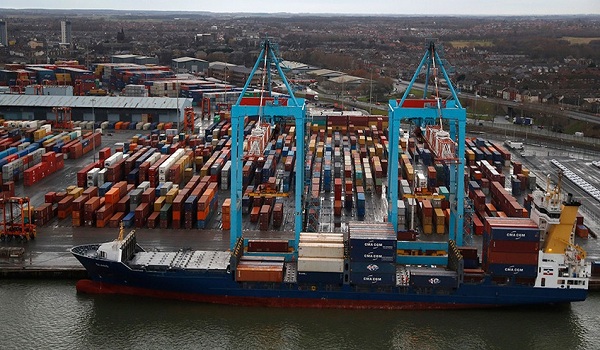
Incorporation of CPTPP Agreement Relating to Origin Rules into Vietnam Laws

The CPTPP Agreement took effect in Vietnam as of January 14th, 2019 including 11 founding countries including Australia, Brunei, Canada, Chile, Japan, Malaysia, Mexico, Singapore, New Zealand, Peru and Vietnam. On January 22nd, 2019, the Vietnam Ministry of Industry and Trade issued Circular No. 03/2019/TT-BCT (Circular 03) regulating rules of origin of goods in the Comprehensive and Progressive Agreement for Trans-Pacific Partnership (CPTPP) to incorporate and implement the commitments of CPTPP. These rules are important for investors whom are transitioning their factories and manufacturing sites from neighboring counties to Vietnam and set up company to obtain the certificate of origin from Vietnam. However, the understanding of regulations of the circular and relating laws requires the consultation of international trade lawyers in Vietnam for application in particular cases.


Goods are treated as an originating goods if meeting the following requirements:

-Wholly obtained or produced entirely in the territory of one or more of the Member States;

-Produced entirely from materials originating in the territory of one or more of the Member States; or

-Produced entirely in the territory of one or more of the Member States using non-originating materials provided that the goods satisfy all applicable requirements of Annex I attached to the Circular 03.

Moreover, CPTPP Agreement stipulates the origin rule for the Remanufactured Good and Sets of Goods, regulated in Article 7 and Article 20 of Circular 03 respectively.

-Regarding the Sets of Goods, the set is treated as originating if the value of all the non-originating goods in the set does not exceed 10% of the value of the set.

-Regarding the Remanufactured Good, Remanufactured Good are committed to treat as new goods at the same type. CPTPP also has very flexible rules regarding rules of origin for these Good: a recovered material derived in the territory of one or more of the Member States is treated as originating when it is used in the production of, and incorporated into, a Remanufactured Good.

Both CPTPP Agreement and Circular 03 (Article 14) also provide De Minimis regulations, which means that a goods that contains non-originating materials that do not satisfy the applicable change in tariff classification requirement for the good is nonetheless an originating good if the value of all those materials does not exceed 10% of the value of the goods.

In addition to Build-up Method and Build-down Method for calculating Regional Value Content (RVC) based on the value of originating and non-originating materials respectively, CPTPP also stipules Focused Value Method based on the value of specified non- originating materials and Net Cost Method for automotive goods only.

Relating to C/O granting, Vietnam shall use the mechanism of certification by competent authority for goods exported to other Member States. The time for implement the mechanism of self-certification of goods origin by exporters is carried out from 5 to 10 years under the guidance of the Ministry of Industry and Trade. The mechanism of Vietnamese importers self-certifying their origin is implemented after 5 years from the effective date of CPTPP. The procedures of certification and inspection of goods origin shall comply with the provisions of Decree No. 31/2018/ND-CP dated on March 8th, 2018 of the Government detailing the Law on Foreign Trade Management on goods origin and other related documents.

Lawyers at International Trade and Taxes practice of ANT Lawyers always follow the changes in law to update client for decision making process in investing and optimizing operations in Vietnam.